vrijdag 26 april 2013

The double shadow of Vermeer


Nine o'clock sharp I arrive at the former bicycle passage underneath the Rijks museum where its entrance is situated already there are two long rows of tourists patiently waiting for the door starting to revolve. Owning a museum card clearly has its advantages, within two minutes I am inside the building. I decide to start at the attic trying to avoid the crowd anticipating that most people will start downstairs.

It turns out to be my lucky day. 

Just in time before the door closes I jump into the elevator, which is already occupied by three other early birds. One of them asks me where I am heading to when I explain my strategy he urges me to revise my plan and to start my journey at the Hall of Fame, promoting it as an unique opportunity to experience this part of the building while it is still empty. 

As we leave the elevator my advisor starts to lecture and point out some details to the other two persons. It turns out that the two American tourists have hired him for a private tour and although I realize it is probably rather impolite I decide to stick and to join the club. 

We enter the Hall of Fame a huge space loaded with 17th century paintings in the back I see a deserted Night Watch patiently waiting for the crowd to come.No soul has arrived yet and there is an unreal silence only our professor is talking, talking like crazy about Johannes Vermeer, feeding us with exciting stories revealing the inside secrets of the three Vermeer paintings that are hanging in a row next to each other. 

Our guide makes us aware of details I never noticed before such as the double shadow in 'The woman in blue' or the strange shape of the table in the painting of 'The Milkmaid' that seems an invented form rather than a copy from reality. And are we aware that in 'The love letter' the tiles are made of marble, not a common floor for a 17th century family house, the marble is probably edited into the space to give it an upgrade. And what about the peculiar way the objects on the floor are arranged creating a barrier that looks like it protects in a symbolic way the two women. 

Endless details draw us deeper and deeper into the world of Vermeer.

For almost twenty minutes I listen to these revelations, mesmerized, when I become aware of my environment again I see and hear that it is transformed into an overly crowded space, there are people discussing, tour operators explaining, film cameras panning, microphones interviewing, this introvert sanctuary has in no time opened up into a busy microcosms.

It is interesting to witness all these dynamics and the general atmosphere is quite lively and positive, everybody seems to enjoy himself, it doesn't feel at all like a dull museum with 'old' art.

What I learned after this visit is you either start early and run for the Hall of Fame or when you can't avoid the crowd you better surrender, forget about making a plan go with the flow and join whatever guide sounds interesting to you.


zondag 17 maart 2013

accidental uniqueness

my first china
This is one of my favorite plates; I bought it eleven years ago together with three other outcasts. Each item carries its own small deformation and all are all made of high quality hotel china. 

Expecting a lot of visitors for lunch coming Sunday I decide it is time to extend my curious little china family with some new unique species. Luckily the shop still exists and even the balloons that mark the entrance look like they have never been away.   

Old stone steps lead me down into a semi dark hallway, probably not really inviting for the ignorant but I know better, I remember the small treasure that I found years ago in this poorly lit and cold canal house cellar.
the owner
Inside resides the owner, a lady in black with a dark husky voice that seems in contradiction with her fragile appearance.
The place is packed with china and there is barely space to walk. Together with another visitor I silently move around in deep concentration, for an outsider it must look like a performance. I balance myself toward the back of hallway where the derelicts are hidden. There seems to be no particular order and many items are out of reach, waiting for the moment to be revealed when their neighbors are sold. While I carefully maneuver through the space, overly conscious of my shopping bag that can destroy a heap of plates any moment, the queen of the china jumps around as if it concerns stacked melamine plates instead of porcelain. While expressing my adoration about the shop to her I hear the sound of something collapsing in the adjacent room, it doesn’t seem to bother her, her face stays stoical, her emporium is invincible.
stacks of porcelain
I find what I am looking for and while settling the bill we have some small talk. The owner explains me that she buys the china straight from the factory in the USA already for 18 years now. It still is a hobby next to her full time job at the university. The mishaps are the heritage of her first five years in action, as a beginner she hadn't yet developed her critical eye.

Will all these irregularities that I love so much slowly disappear and be replaced by the perfect china? I fear this will be inevitable but I am also quite sure that the uniqueness of the shop and its owner will still be worthwhile a visit.
irregular and unique


woensdag 20 februari 2013

Russian hybrids

A visit to the photography museum Foam on the Keizersgracht is one of my favorite things to do, it always proofs to be worthwhile. During the last 10 years I have seen many interesting exhibitions. When the two major museums of Amsterdam were closed for renovation purposes the Foam offered me salvation and it still does.

Not only the selection of the work is often brilliant but also the way it is presented. For the current exhibition on Russian Color Photography the colors of the walls are transformed into an outspoken daring color combination. And it works surprisingly well!

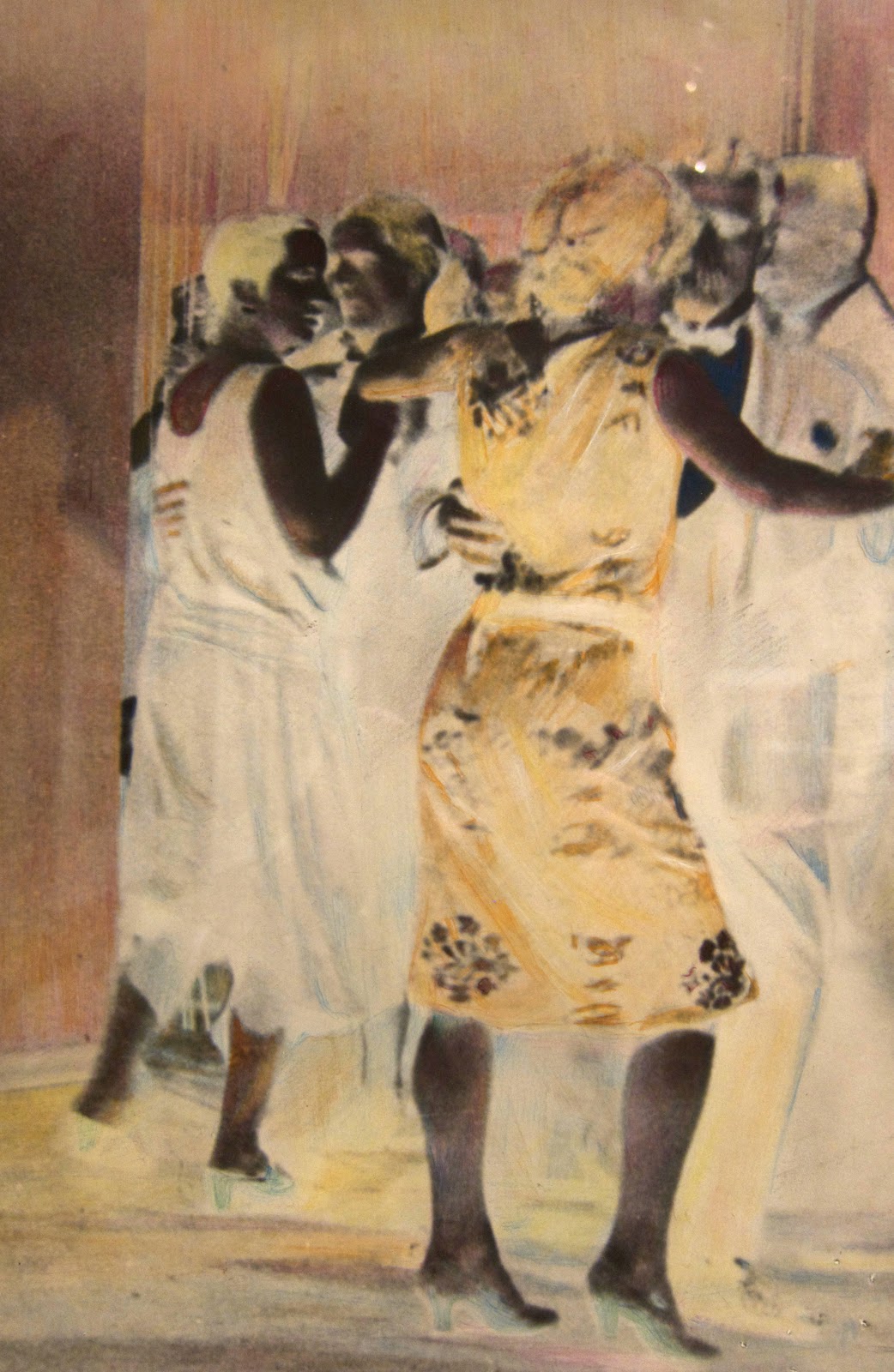
The exhibition in itself is fascinating for two reasons I think. On the one hand for the depiction of Russian history starting from 1850s onward, on the other hand for the technical and experimental quality of the images. The exhibition is an interesting showcase of the many ways color can be added to a black and white photograph. Through a combination of different media a sort of hybrid images are created, such as the application of oil painting, water color or crayon on a silver print.

On the site some examples are shown, but of course much better is to see the real images in the Foam museum, I am sure you won't be disappointed!
http://www.foam.org
Moscow 1909, Portret of boy, gelatine silverprint gouache
70ties, Boris Mikhailov, Luriki series 
1928 Rhumba, Alexander Rodchenko, colour crayon on gelatine silver print


maandag 11 februari 2013

seeing is believing

The Believer is omnipresent. Not in a religious sense, as churches are gradually fading out of our society. But as somebody who believes in his own cause, making his own choices, setting his own goals, not distracted by expectations set by the outside world. The Believer is on a mission and creates his own truth. Driven by enthusiasm, faith and passion he is an amateur in the true sense of the word (from the Latin 'amator', 'lover'). The point of view of The Believer is unique and his intense focus disconnects his work from existing conventions. His belief is his life and sometimes they make a living doing it,but they really don't care if you call them professionals or hobbyists. They just do it.

They've always been around, but new media make their fascination easily visible. Sometimes a Believer gets picked up by a curator, as was the case with The Museum of Everything. 
http://www.museumofeverything.com/

Dutch designer Christien Meindertsma puts the modest Loes Veenstra in the limelight by archiving and exhibiting her lifelong passion for knitting random sweaters.
The collected knittings of Loes Veenstra, cover and content
Bill Cunningham does only one thing: whenever he gets up, he takes his camera and his bikes on the streets of NYC and starts looking at the way people dress. He has a sharp eye and the ultimate embarrassment is "when you pass him & he doesn't take your picture". says Anna Wintour. He publishes in the NewYork Times and his observations are as educational as amusing. 
This week fashion is out of fashion, because it's New York Fashion Week. 
1984 Bill Cunningham, photo by Arthur Elgort
Also don't forget to watch the documentary about this heartwarming and inspiring man: http://youtu.be/NYqiLJBXbss


maandag 28 januari 2013

Our Lord in the Attic


Early Saturday morning and although its cold and weekend I decide nevertheless to visit the Winter Salon. This Art Fashion and Design event is spread over various unique locations in Amsterdam and organized twice a year. The kick off is at Our Lord in the Attic, a hidden Catholic church built during the Reformation in the 17th century. The church is nearly empty, the tourists are probably outside searching for the church that doesn't look like a church.

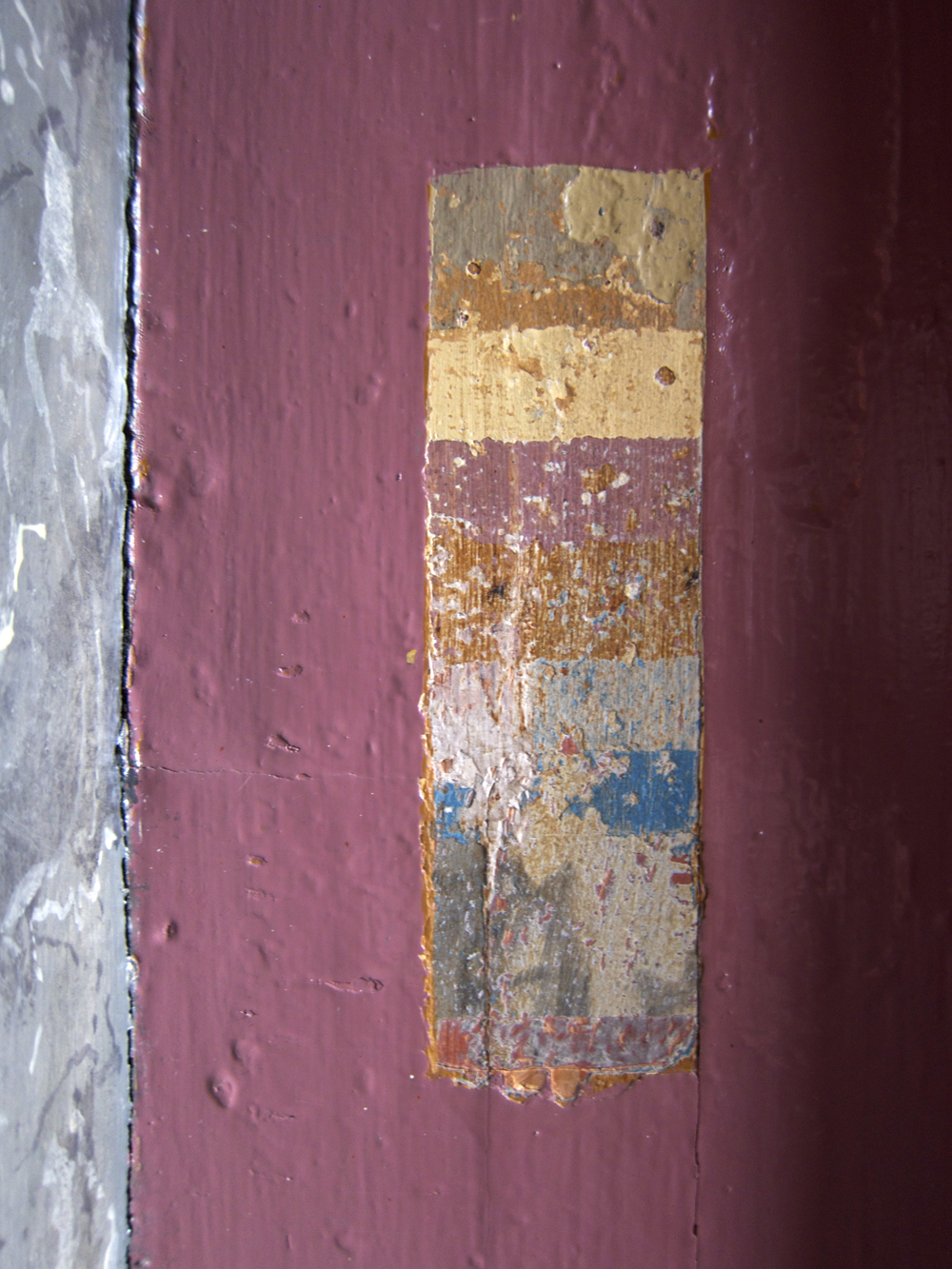
The experience of this holy space with its beautiful colors and rich materials is quite exceptional and the exhibited contemporary expressions blend in surprisingly well. The interior has just been renovated and some traces of historical research are still visible. Funny how my judgement of the presented works seems to be influenced by the atmosphere of this hidden sanctuary. A bit blurred.

Outside some first snow flakes swirl down in slow motion, inside its warm and safe. I think I 'll stay just a little bit longer.

Louise te Poele City Bird
Traces of restauration research
wallpaper
Ceramic tiles floor pattern
FredFarrowBrittAvelontan
After I leave the church the weather is becoming more and more dramatic. The rest of the day is a constant search for shelter and hope for a reliving of the Our Lord in the Attic experience. Each time I enter the next historic highlight I feel a relief, friendly people, nice environment, but the presentations are often disappointing. Luckily there are some exceptions that makes this quest worthwhile.

Museum Geelvinck pantry, low storage room above the dining room
Museum Geelvinck, Sara Vrugt
Museum 'Het Grachtenhuis' Vroonland and Vaandrager
Museum 'Het Grachtenhuis' Borre Akkersdijk en Friso Dijkstra
Museum Het Grachtenhuis, Desiree Hammen "Cherish"


zondag 20 januari 2013

The museum of everything


14, Boulevard Raspail, Paris
Walking on the Boulevard Raspail I notice a sign positioned above an alley that draws my attention. Although I had decided to spend my time in Paris as efficiently as possible I somehow can't ignore this elegantly black and red hand painted sign with the mysterious title: 'The museum of everything'...

a trail of anonymous names
Once entering the alley there is no way back. The walls are covered with strains of unfamiliar names in hand written typography, it invites me to go deeper into tunnel. Halfway the alley a young man sitting inside a little red and white striped cubicle is selling tickets, now it really starts to feel as if I have walked into a performance. Some small talk with the man learns me that this is not a regular museum, this is a place where work of some 200 autodidactic artist is presented. It sounds crazy enough to me to decide to go with the flow and to buy a ticket.
ticket vending box
The alley leeds me to a spacious 'cour' with a hugh building in it, a former catholic boarding school for girls as I am explained later. The big arrow in the 'cour' leaves no doubt where to head to. I climb the two storeys high external metal staircase and when I finally enter the space I am overwhelmed. Overwhelmed by the intensity and the density of the exhibited work, the whole place is packed with paintings, small installations, photographs, textile art: you name it and it's there.
la cour
signs for everything
Next to each work hangs a sign with a description of personal details connecting the peculiar fascinations of the artist with the exposed work. Sometimes it describes drama in a nutshell, sometimes it's really crazy but often it's touching. These little stories can concern anybody, they read like a compact representation of daily life flirting with the crazy side of it.


It is not allowed to take pictures of the exhibited work, warnings of a 1000 euro fine for the sinner are clearly taken seriously by the visitors. Luckily the attendant gives me permission to take photographs of the text, which to me is as important as the work itself. The same woman also explains me more about the story behind the exhibition that is originally coming from London. The British curator James Brett initiated the concept of the Museum of Everything with work of the 'self made man' that is 'living outside society'. Le nouveau 'Art Brut' as she explains to me.

Whatever it's called and however it's labelled it is a fascinating and convincing exhibition. You can easily wander around for hours in this hugh unpolished art space absorbing the stories. Unfortunately the exhibition will be finished soon and as I understood the building will be torn down in the near future. A pity, the rawness of this space feels like the perfect context for these captured emotions.